Which Vitamin Deficiency Causes Hair Fall? A Complete Guide for Indian Lifestyles
Finding clumps of hair on your comb or bathroom floor every morning can be deeply distressing. While losing 50 to 100 strands a day is entirely normal, excessive shedding is often your body's alarm bell signaling an underlying nutritional deficit.
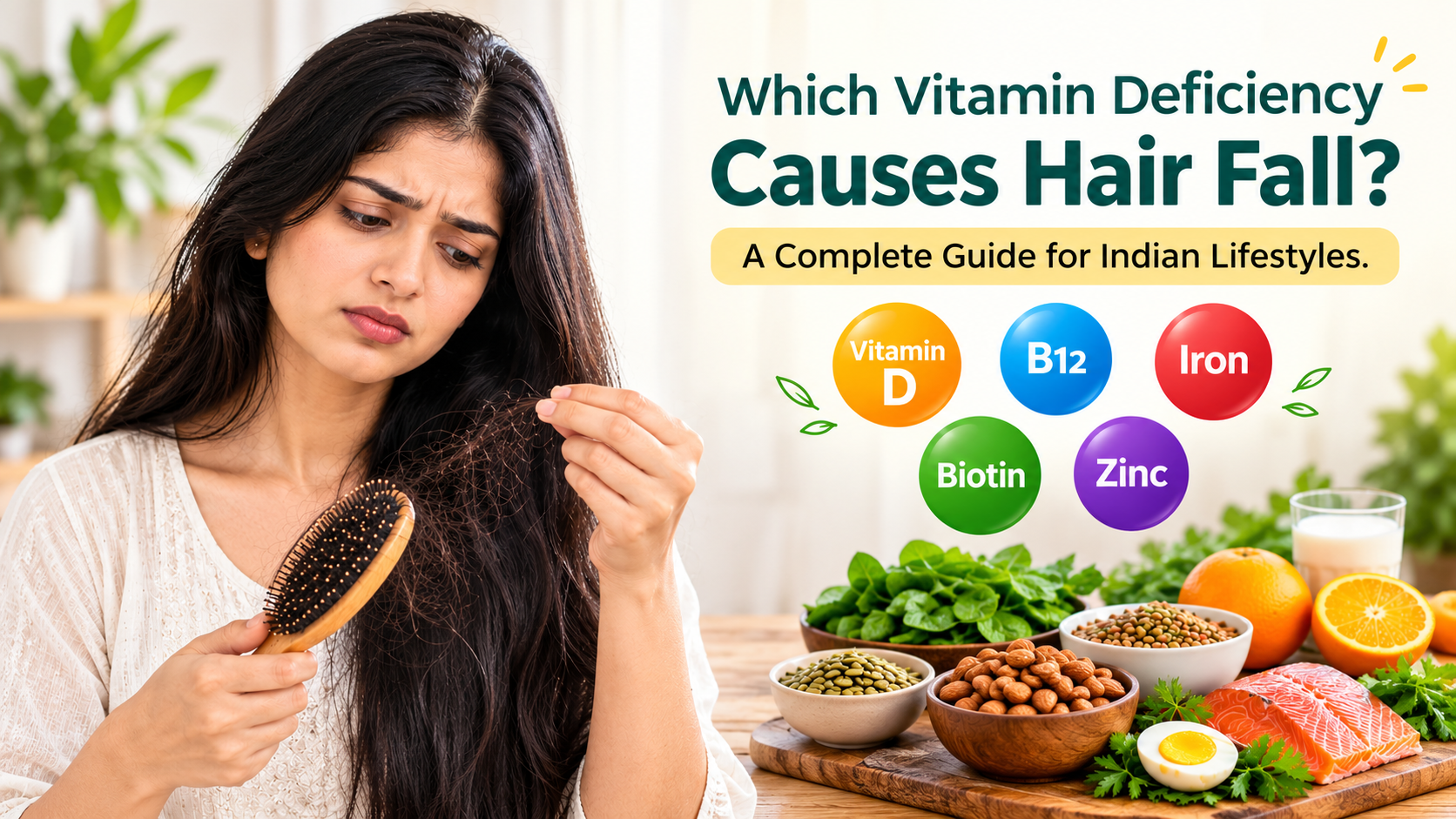
In India, hectic urban schedules, sedentary habits, stress, and specific dietary patterns (such as vegetarian or vegan diets) make nutrient deficiencies remarkably common. When your body lacks essential vitamins and minerals, it diverts vital nutrients away from non-essential tissues like hair follicles to protect critical internal organs, triggering diffuse hair thinning.
ℹ️ Key Takeaway for Indian Households
Over 70% of urban Indians suffer from sub-optimal Vitamin D and Vitamin B12 levels. Combined with hard water mineral buildup in major metro cities, hair fall has become one of the top wellness concerns across the country.
1. Vitamin D Deficiency: The Sunshine Vitamin Gap
Despite India being a tropical country blessed with abundant sunlight, Vitamin D deficiency is staggeringly high. Why? Urban lifestyles mean most Indians spend indoors under artificial lighting, use heavy sunscreens, or wear covering clothes.
🩺 How it affects hair:
Vitamin D receptors help stimulate new hair follicles. Without adequate levels, hair follicles struggle to cycle correctly, leading to prolonged resting phases (telogen effluvium) and hair thinning. It is also linked with alopecia areata.

2. Vitamin B12 & Iron (Ferritin): The Vegetarian Dilemma
In a predominantly vegetarian nation like India, maintaining optimal Vitamin B12 and serum ferritin (iron storage) levels requires conscious dietary planning. B12 is naturally found almost exclusively in animal products, while plant-based iron (non-heme) has lower absorption rates than animal-based iron (heme).
🍴 Best Indian Diet Sources to Bridge the Gap:
✅Amla & Citrus Fruits: Boosts iron absorption
✅Spinach & Moringa (Sahjan): Rich in natural iron
✅Paneer, Curd & Milk: Great vegetarian B12 & protein source
✅Nuts & Seeds: Walnuts, almonds, and pumpkin seeds
3. Biotin (Vitamin B7) & Zinc: Keratin Builders
Keratin is the fundamental structural protein that makes up your hair strands. Biotin helps synthesize keratin, while Zinc is vital for tissue growth and repair, including the oil glands surrounding hair follicles. A deficiency in zinc often causes hair to become brittle and prone to breakage alongside dandruff flare-ups.
💧 The Hard Water Factor in Indian Metros
Residents living in cities like Delhi, Bengaluru, Chennai, and Mumbai frequently deal with hard water laden with calcium and magnesium carbonates. When combined with nutritional deficiencies, hard water mineral deposits choke hair roots, causing severe hair breakage. Using clarifying shampoos or hard-water filters is strongly recommended alongside proper supplementation.
Actionable Steps to Revitalize Your Hair
🧪 1. Get a Full Blood Panel Done
Don't guess—test. Check your serum ferritin, Vitamin D3, Vitamin B12, and thyroid (TSH) levels before starting high-dose supplements.
🥗 2. Prioritize Protein & Ayurvedic Superfoods
Incorporate Bhringraj, Amla, Ashwagandha, and sufficient protein (dal, paneer, sprouts, or lean meats) into your daily Indian diet.