
What Is the Best Daily Wellness Routine for a Healthy Lifestyle?
A practical, India-friendly daily routine built around the habits that matter most: nourishing food, regular movement, enough sleep, hydration, mental wellbeing and preventive health.
So, what is the best daily wellness routine?
There is no single “perfect” routine.
The best routine is one you can repeat consistently. For most healthy adults in India, a strong foundation is regular balanced meals, daily movement, planned exercise, adequate water, 7+ hours of good-quality sleep, time for mental recovery, and routine preventive healthcare.
A wellness routine does not need to be complicated or expensive. It should fit your work schedule, family responsibilities, climate, food culture and current fitness level. Think of wellness as a set of small behaviours repeated over weeks and months—not a one-day detox or an extreme morning routine.
1. Start the morning without making it complicated
💧
Hydrate normally
Drink water according to thirst and your individual needs. Hot weather, exercise and heavy sweating can increase fluid needs.
☀️
Get daylight
Natural light early in the day can help anchor your sleep–wake rhythm. A short outdoor walk can combine light exposure with movement.
🧘
Settle your mind
Use a few minutes for breathing, prayer, meditation, journaling or quiet planning—whatever is meaningful to you.
Bear & Blend Tip: If mornings are busy, do not try to fit ten habits into one hour. Choose two or three essentials and make them automatic.
2. Build meals around nourishment, not restriction
A healthy Indian eating pattern can include familiar foods. The goal is variety and balance across the day rather than labelling individual foods as “good” or “bad”. ICMR-NIN’s 2024 Dietary Guidelines place emphasis on diverse diets, vegetables and fruits, pulses/legumes, whole grains and other nutrient-rich foods, while limiting foods high in added sugar, salt and unhealthy fats.
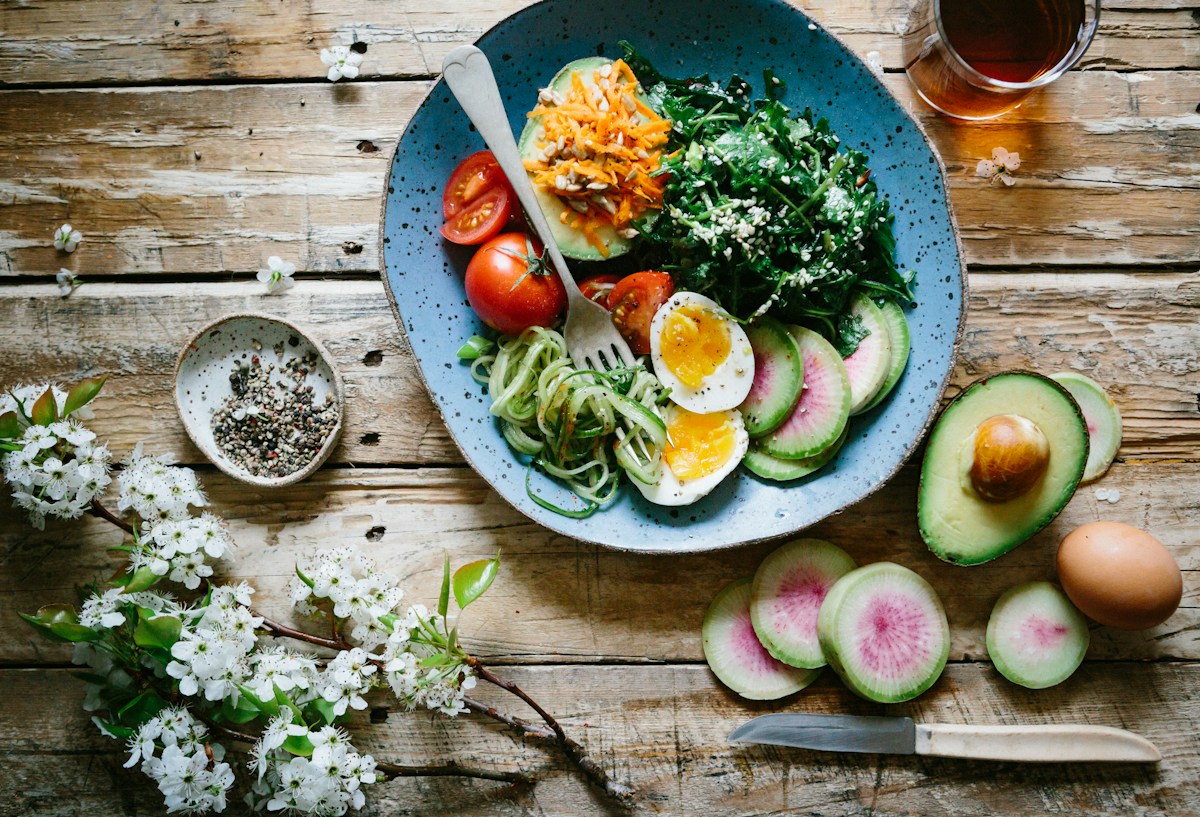
A practical Indian plate
Include vegetables regularly.
Add a protein source such as dal, beans, curd, eggs, fish, poultry, paneer or tofu according to preference.
Choose whole grains or less-refined staples when practical.
Include fruit as part of the day.
Use nuts, seeds and healthy fats in sensible portions.
Keep highly processed, very sugary and very salty foods occasional rather than everyday staples.
Do not fear carbohydrates. Rice, roti, oats, millets and other grains can fit into a healthy diet. Portion, preparation, overall diet quality and your individual health needs matter more than declaring one staple “unhealthy”.
3. Make movement part of the day
For adults, WHO recommends at least 150–300 minutes of moderate-intensity aerobic activity per week, or 75–150 minutes of vigorous activity, plus muscle-strengthening activity on at least two days per week. ICMR-NIN’s Indian guidelines also encourage regular moderate activity and muscle strengthening.
🚶
Walk more
Walking for transport, errands, after meals or during breaks all counts as physical activity.
🏋️
Strengthen muscles
Use bodyweight exercises, resistance bands or weights according to your ability. Progress gradually.
🧘♀️
Add mobility
Yoga, stretching and mobility work can complement aerobic and strength activity.
Beginner rule: If you are currently inactive, start small and increase gradually. If you have a medical condition, significant symptoms or have been sedentary for a long time, ask a healthcare professional about an appropriate exercise plan.
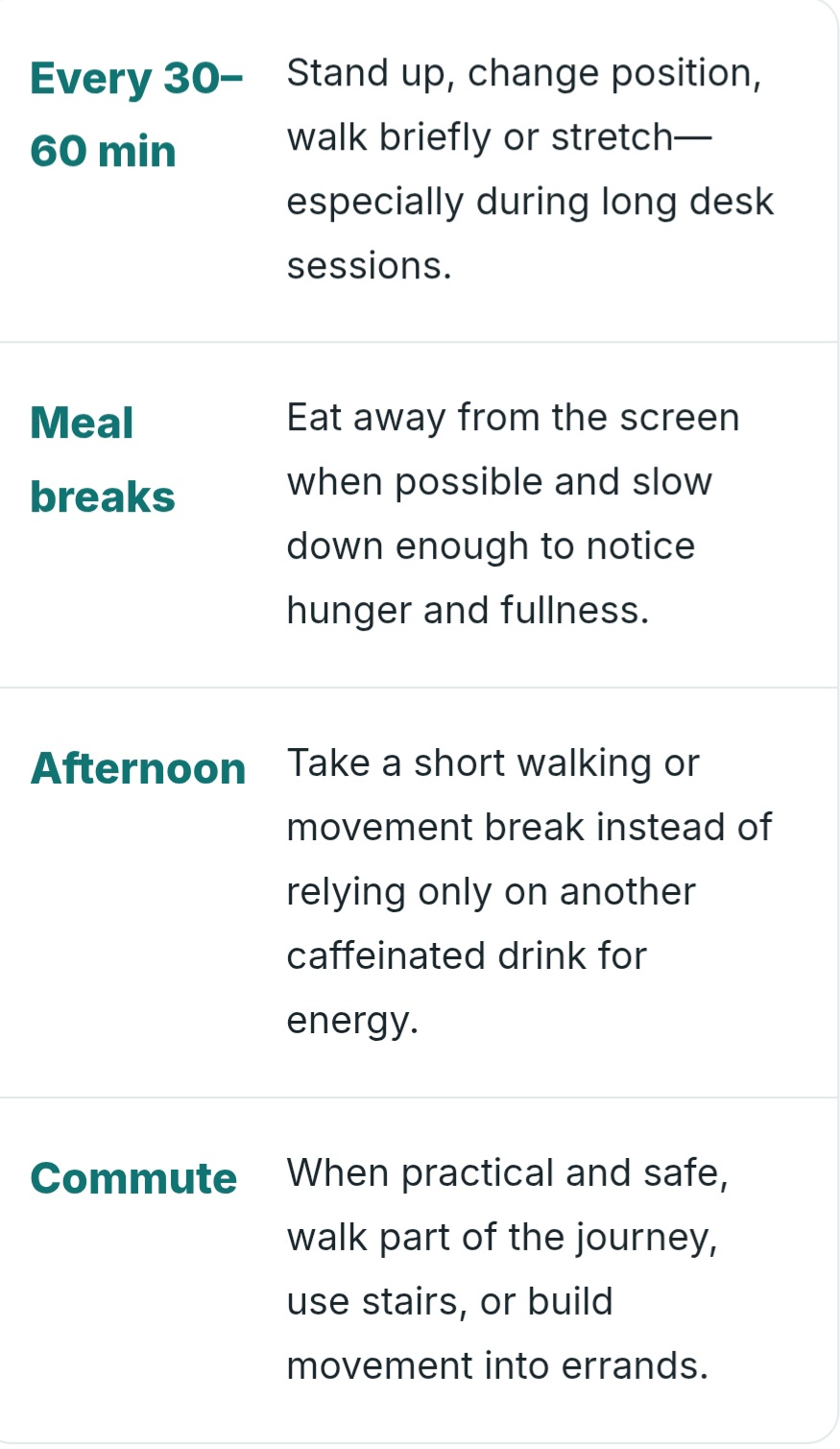
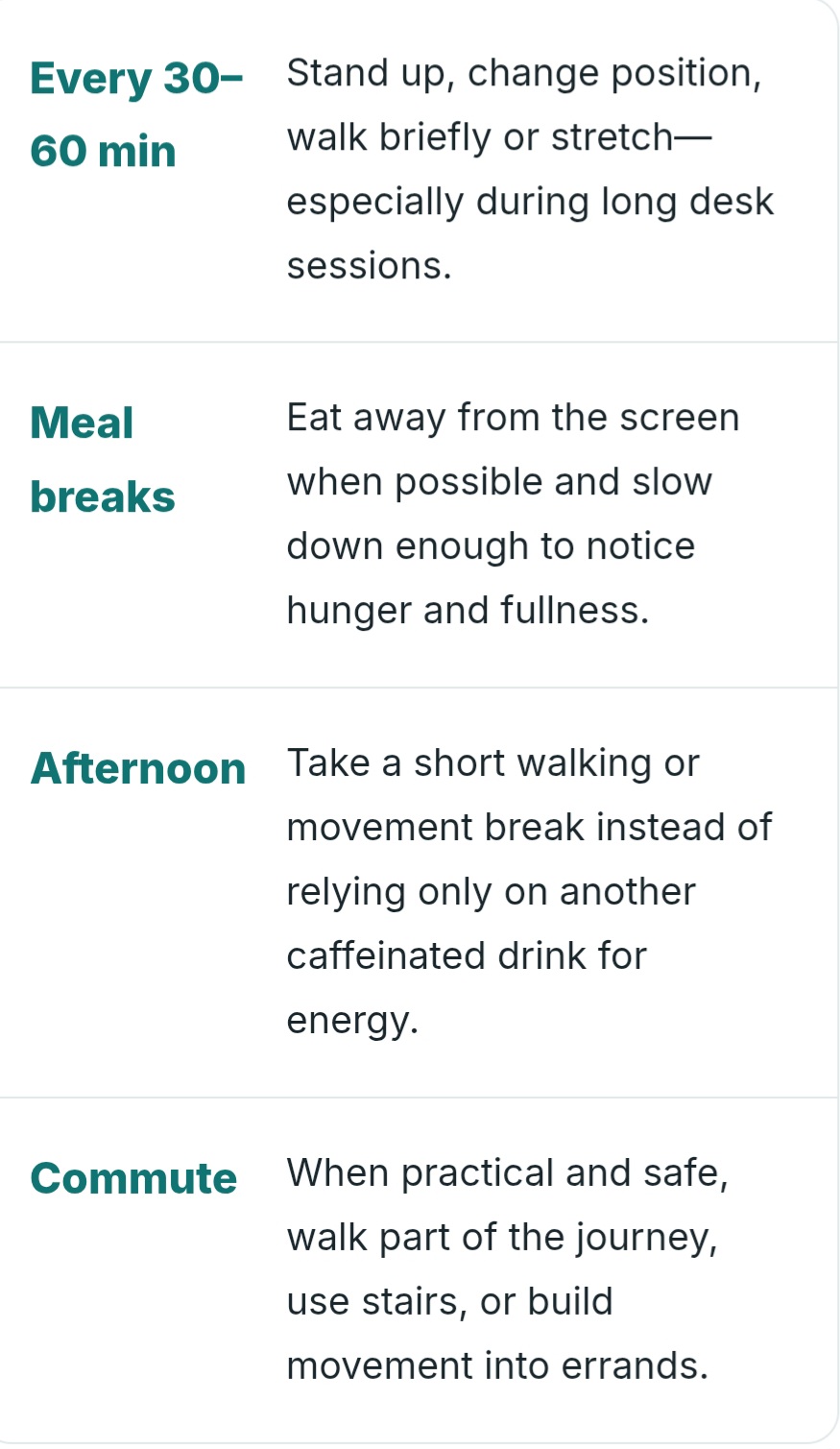
4. Make your workday healthier
A wellness routine should work during office hours too. Long periods of sitting can make a healthy lifestyle difficult even when you exercise later. Look for small opportunities to move.
5. Give mental wellbeing a place in the routine
Wellness is not only physical. Stress, loneliness, poor sleep and constant digital stimulation can affect how you eat, move, sleep and function. A sustainable routine should include something that helps you recover mentally.
Spend a few minutes in quiet reflection, meditation, prayer or breathing exercises.
Make time for supportive relationships and face-to-face connection.
Schedule enjoyable activities rather than treating them as an optional reward.
Set boundaries around work and notifications when possible.
Seek professional mental-health support if persistent anxiety, low mood or distress is interfering with daily life.
6. Protect your sleep
Sleep is part of your health routine—not wasted time.
Most adults need at least 7 hours of sleep per night. Good sleep supports daytime functioning, mood and overall health. citeturn2search13turn2search16
Keep a reasonably consistent sleep and wake time.
Reduce bright screens and stimulating activity close to bedtime.
Keep the bedroom comfortable, quiet and dark where possible.
Avoid very heavy meals and large amounts of caffeine late in the day.

7. Hydrate according to your body and your environment
There is no universal “eight glasses” rule that fits everyone. Fluid needs vary with body size, diet, activity, illness and climate. In India, heat and humidity can make hydration especially important, particularly during outdoor activity or heavy sweating.
Water should be the main everyday drink for most people. Thirst, urine colour, activity level and the environment can help guide intake. People with certain kidney, heart or liver conditions may need individualized fluid advice from a clinician.
8. A realistic weekly wellness checklist
Every day
Eat a varied diet
Drink fluids regularly
Move throughout the day
Make time to decompress
Protect sleep
Most days
Do purposeful aerobic activity
Eat vegetables and fruit
Spend some time outdoors
Connect with people
Each week
Complete strength sessions
Plan meals and activity
Review what worked
Adjust rather than quit
A sample Indian-friendly daily routine
This is an example, not a prescription. Shift the timing around work, school, family, climate and personal preference.
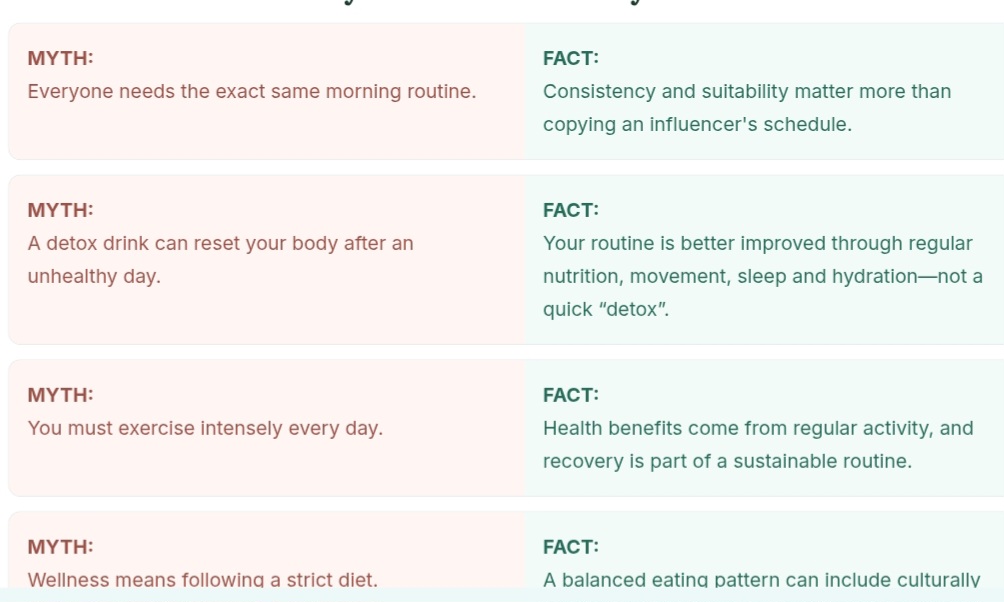
Common wellness myths: what actually matters?
When should your routine be personalized?
A general wellness routine is not a substitute for medical care. If you are pregnant, older, recovering from illness or surgery, living with diabetes, kidney/heart disease, hypertension, an eating disorder, significant obesity, or another chronic condition, your nutrition, exercise, hydration and sleep needs may require individualized guidance.
Seek medical attention for new or severe symptoms rather than trying to solve them through lifestyle changes alone.
Do I need supplements for a healthy lifestyle?
Not automatically. Supplements can be useful in specific situations, but needs depend on diet, life stage, deficiencies and medical conditions. They should not replace a balanced diet or be taken unnecessarily.
Can I follow this routine if I work long hours?
Yes. Start with high-impact habits: sleep, regular meals, movement breaks, walking, hydration and a small amount of planned exercise. A 20–30 minute activity block is better than waiting for a perfect schedule.
Is an Indian diet compatible with a healthy lifestyle?
Yes. Traditional Indian meals can be nutritious when built around variety, vegetables, pulses/other protein foods, appropriate portions of grains and minimally processed foods.