What Is the Best Breakfast for Lowering Blood Sugar?
A practical India-focused guide to building a breakfast that supports steadier blood glucose—without giving up familiar foods such as poha, chilla, idli or roti.
The short answer
There is no single breakfast that “lowers blood sugar” for everyone. The better goal is a breakfast that produces a smaller, steadier rise in glucose. In practice, that usually means combining a protein source, plenty of fibre-rich vegetables or pulses, a measured portion of higher-quality carbohydrate, and a small amount of healthy fat.
For an Indian diet, excellent everyday choices include moong dal or besan chilla with vegetables and plain curd, vegetable poha with peanuts plus curd or sprouts, idli with a generous serving of sambar, and savoury oats or dalia cooked with vegetables and a pulse. The best choice is the one you can eat consistently in an appropriate portion.
What makes a breakfast better for blood sugar?
Blood glucose is influenced by the total amount and type of carbohydrate, how processed the food is, portion size, fibre, protein, activity, sleep, medicines and your individual response. So “low-carb” does not automatically mean “healthy,” and a food labelled “diabetic-friendly” is not a guarantee of a low glucose response.
01 · Protein
Dal, sprouts, eggs, paneer, unsweetened curd or milk can make the meal more filling.02 · Fibre
Vegetables, whole pulses, oats, dalia, nuts and seeds slow digestion and support fullness.03 · Better carbs
Prefer minimally processed whole grains, pulses and whole fruit over refined flour and sugary foods.04 · Portion control
Even nutritious foods can raise glucose when the carbohydrate portion is very large.ICMR guidance for people with type 2 diabetes recommends fibre-rich foods, whole grains and whole pulses, vegetables and suitable protein sources. It also advises avoiding fruit juices and limiting added sugars.
Best Indian breakfast options for steadier blood sugar
Moong dal chilla + curd
Soaked moong provides protein and fibre. Add onion, tomato, spinach or capsicum and cook with a light amount of oil.
Vegetable poha + peanuts
Poha is mainly carbohydrate, so bulk it up with vegetables and peanuts, then add curd or sprouts for more protein.
Idli + plenty of sambar
Steamed idli can fit into a balanced breakfast. Keep the idli portion moderate and make sambar the protein-and-vegetable partner.
Savoury oats or dalia
Cook with vegetables and add dal, roasted chana, nuts or seeds. Avoid sweetened instant oat mixes and large amounts of jaggery or honey.
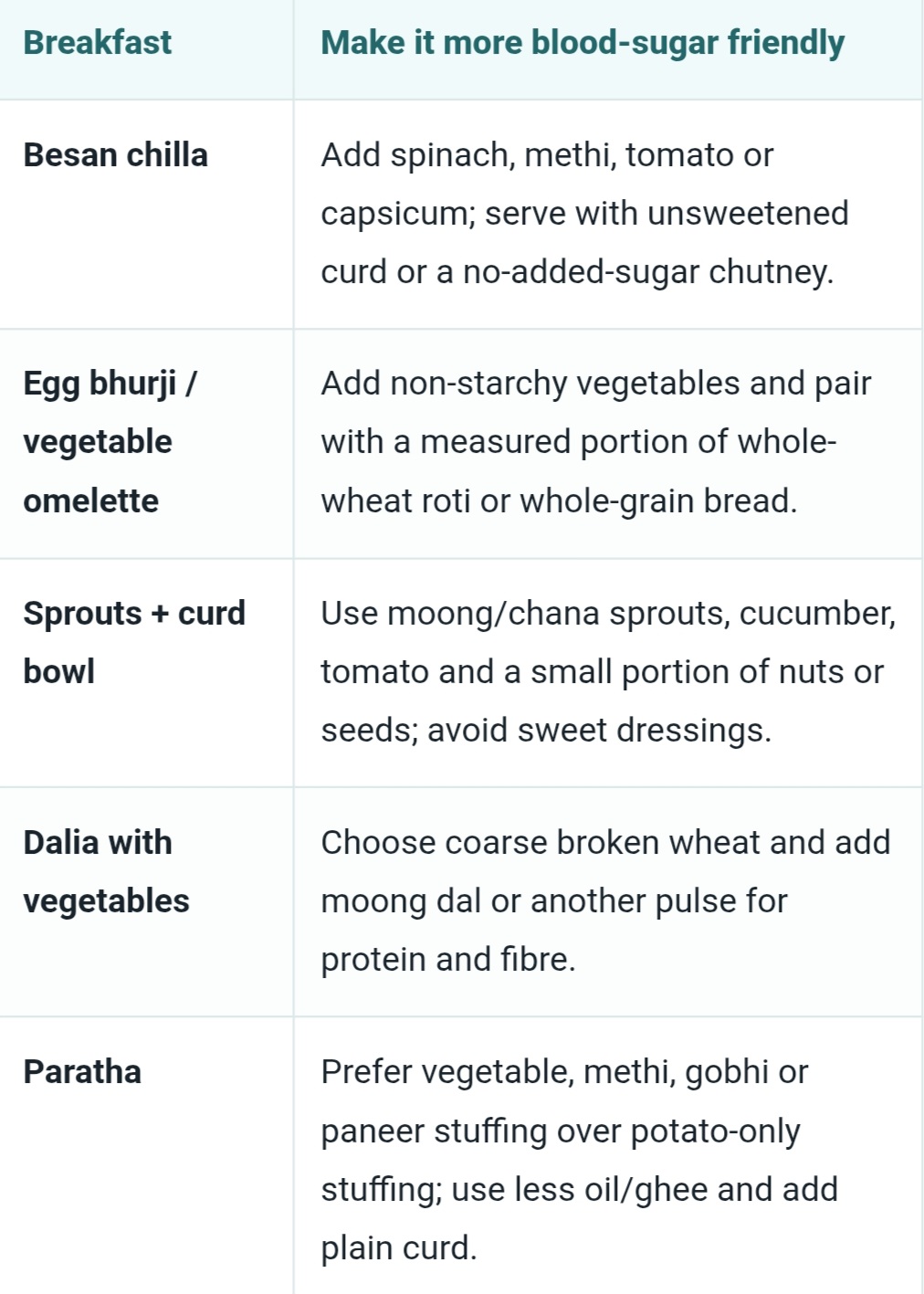
Other good combinations
Breakfasts that can make blood sugar harder to manage
Watch the “healthy-looking” extras
Common breakfast problems are often the combination of foods rather than one ingredient. Large portions of poha/upma, sweetened tea, biscuits, jam, sugary cereals, fruit juice, flavoured yoghurt, sweetened oats, bakery foods and refined-flour toast can add a lot of rapidly available carbohydrate.
Choose whole fruit rather than fruit juice.
Choose plain curd rather than sweetened/flavoured yoghurt.
Choose unsweetened oats rather than instant sweetened oat sachets.
Limit biscuits and bakery foods even when the package says “multigrain” or “healthy.”
Tea/coffee is fine for many people, but keep added sugar small or skip it.
5 simple morning habits that can help
Build breakfast around protein and fibre. Do not make refined cereal or bread the entire meal.
Measure the carbohydrate portion. A large bowl of an otherwise healthy grain can still produce a substantial glucose rise.
Drink water instead of juice. Whole fruit is generally a better choice than fruit juice because it retains fibre.
Move after breakfast when practical. A short, comfortable walk after a meal can help muscles use glucose; match activity to your health and clinician's advice.
Look at your own glucose response. If you use a glucose meter or CGM, consistent patterns can help you and your healthcare professional identify which portions and foods work best for you.
What if you have diabetes or take diabetes medicines?
If you use insulin or medicines that can cause hypoglycaemia, do not suddenly skip breakfast or drastically cut carbohydrate without discussing the change with your doctor or diabetes educator. Meal timing and medication doses can interact.
If fasting or post-breakfast glucose remains above your target despite making sensible food choices, the answer may not be another “superfood.” Your clinician may need to review medication, sleep, activity, weight, illness, stress and your overall meal pattern.
Bottom line: For most Indian households, a blood-sugar-friendly breakfast is not a special imported diet. It can be familiar food—moong/besan chilla, vegetable poha, idli with sambar, savoury oats/dalia, eggs with vegetables, or sprouts with curd—prepared with more fibre and protein, less added sugar, sensible portions and minimal ultra-processed extras.