
What Is an HbA1c Test, and What Is a Safe Score?
HbA1c is one of the most useful tests for understanding average blood sugar over the previous 2–3 months. Here is what the number means, which ranges are used in India, and why your personal target may be different.
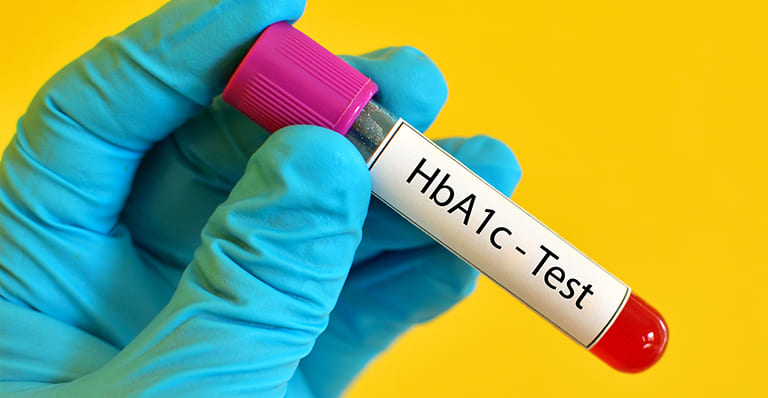
What is an HbA1c test?
HbA1c (haemoglobin A1c or glycated haemoglobin) is a blood test that estimates your average blood glucose exposure over roughly the previous 2–3 months. Glucose naturally attaches to haemoglobin inside red blood cells; when average glucose is higher, a greater percentage of haemoglobin becomes glycated.
Unlike a fasting or random blood glucose reading—which tells you what your sugar level looks like at a particular moment—HbA1c gives a longer-term view. Because red blood cells live for about 120 days, the result reflects a longer period, with more recent glucose levels having a stronger influence.
Important: HbA1c is a percentage, not a blood-glucose reading in mg/dL. A result such as 6.5% means that 6.5% of measured haemoglobin is glycated; it does not mean your blood glucose is 6.5 mg/dL.
What is a normal HbA1c level?
For non-pregnant adults, the commonly used diagnostic categories are the same ones referenced by ICMR guidance and current international standards:
HbA1c result,How it is generally interpreted,What it means
< 5.7% ,Normal range,Below the usual prediabetes threshold.
5.7–6.4% ,Prediabetes range,Higher risk of progressing to type 2 diabetes; lifestyle and medical follow-up matter.
≥ 6.5% ,Diabetes range,Meets the HbA1c criterion for diabetes, but diagnosis generally needs confirmation when there is no unequivocal hyperglycaemia or classic symptoms.
So, what is a “safe” HbA1c score?
The answer depends on whether you are being screened for diabetes or are already living with diabetes.
If you do not have diagnosed diabetes
An HbA1c below 5.7% is generally considered within the normal range. Results from 5.7% to 6.4% indicate prediabetes and are a useful opportunity to reduce future risk.
If you have diagnosed diabetes
For many non-pregnant adults, the 2026 ADA target is<7%. Some people may appropriately have a lower or higher target depending on age, health, treatment burden and risk of hypoglycaemia.
Key point: “Lower is always better” is not the right rule. Diabetes targets should be individualized so that glucose is controlled without creating an unacceptable risk of hypoglycaemia or other treatment-related harm.
HbA1c and estimated average glucose (eAG)
HbA1c can be translated approximately into an estimated average glucose (eAG). This can make a percentage easier to understand, but eAG is still an estimate and should not replace your actual glucose readings.
HbA1c, Approx eAG, why it matters
6.0% ,126 mg/dL ,Near the upper end of the normal/prediabetes boundary.
6.5% ,140 mg/dL ,At the diagnostic HbA1c threshold for diabetes.
7.0% ,154 mg/dL, A common treatment target for many adults with diabetes.
8.0% ,183 mg/dL ,Above the usual target for many adults; treatment review may be needed.
9.0% ,212 mg/dL ,Significantly above target for most adults with diabetes.
How is an HbA1c test done?
It is a routine blood test performed using a blood sample, usually drawn from a vein. Fasting is generally not required for HbA1c itself. If your doctor orders other tests at the same time, those tests may have separate preparation requirements.
Simple blood sample: the laboratory measures glycated haemoglobin.
No fasting for HbA1c alone: you can generally eat and drink normally unless other tests require fasting.
Useful for diagnosis and monitoring: it can help identify prediabetes/diabetes and track long-term glucose control.
Repeat testing may be needed: especially when a result is unexpected or diagnosis is not clear.
When can an HbA1c result be misleading?
HbA1c is useful, but it is not perfect. Conditions that change red-blood-cell survival or haemoglobin can make the number look higher or lower than the person's actual average glucose exposure.
Examples that may affect accuracy
Some anaemias, recent blood loss or transfusion, pregnancy, kidney disease, and certain haemoglobin variants or blood disorders can interfere with interpretation.
What to do
If your HbA1c does not match your home glucose readings or symptoms, tell your doctor. Another glucose test or an alternative marker may sometimes be appropriate.
India-specific consideration: if you have anaemia or a known haemoglobin disorder such as thalassaemia, tell your healthcare professional before relying on HbA1c for diagnosis or major treatment decisions.
What can help keep HbA1c in a healthy range?
There is no single food, supplement or home remedy that guarantees a lower HbA1c. Long-term glucose control is usually built from several consistent habits, together with medicines when prescribed.
Choose balanced meals with vegetables, fibre-rich foods and appropriate portions of whole grains and protein.
Limit frequent sugary drinks, sweets and highly refined carbohydrate portions.
Stay physically active according to your health and your clinician’s advice.
Take diabetes medicines exactly as prescribed; do not stop or change them because an HbA1c result improves.
Track glucose when recommended and keep regular follow-up appointments.
Work toward a healthy weight if advised by your healthcare professional.
Is an HbA1c of 5.7% diabetes?
No. In adults, 5.7% is the lower boundary of the prediabetes range. Diabetes is diagnosed at HbA1c ≥6.5%, subject to appropriate clinical confirmation when required.
Is 6.5% HbA1c dangerous?
It is the diagnostic threshold for diabetes, not a standalone measure of how sick someone is. If the result is new, discuss it with a clinician for confirmation and a complete assessment.
Is HbA1c 7% safe?
For many non-pregnant adults who have diabetes, an HbA1c goal below 7% is appropriate. A value around 7% can therefore be close to the usual treatment target, but the correct target is individualized.
Can I drink water before an HbA1c test?
Yes. HbA1c itself does not normally require fasting. Follow your laboratory or doctor's instructions if other blood tests are being done at the same time.
How often should HbA1c be checked?
It depends on your treatment and whether you are meeting your individualized goal. People with diabetes may be tested about every 3 months when therapy is changing or control is not at goal, and less often once stable.
Can HbA1c alone confirm diabetes?
It can be used for diagnosis when a standardized test is appropriate, but when a person has no unequivocal hyperglycaemia, current standards call for confirmatory testing. Your clinician may repeat HbA1c or use a plasma glucose test.