
How to Stop Hair Fall Immediately: Expert Ayurvedic & Scientific Tips for the Indian Lifestyle
Experiencing sudden clumps of hair on your pillow or shower drain? Discover instant damage-control steps, hard-water solutions, and time-tested Indian remedies to protect your crown.
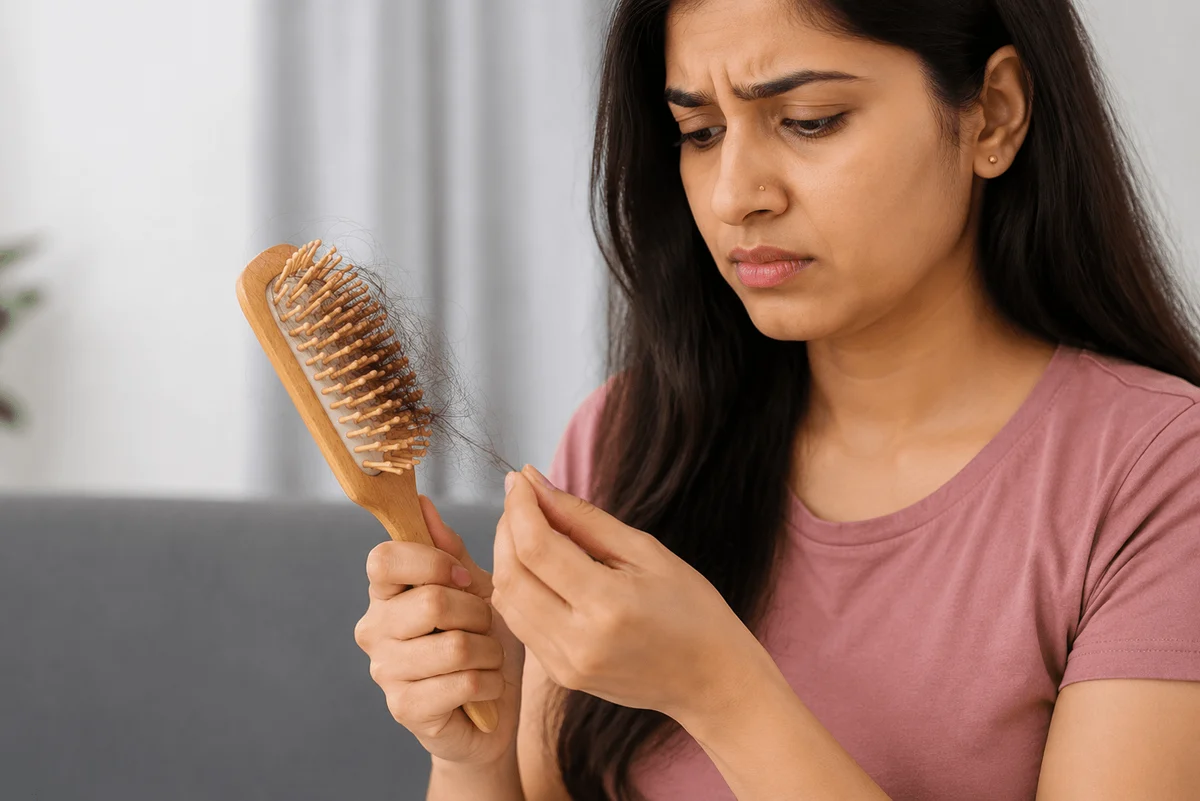
Table of Contents
1. Why Hair Fall Spikes in the Indian Climate
2. Immediate Damage Control Steps (Do's & Don'ts)
3. The Power of Traditional Oiling (Bhringraj & Amla)
4. Combating Hard Water Damage Across Indian Cities
5. Indian Superfoods for Scalp Nutrition
6. Frequently Asked Questions
1. Why Hair Fall Spikes in the Indian Climate
Hair fall is one of the most common aesthetic and health concerns across India. From the humid coastal weather of Mumbai and Chennai to the hard borewell water in tech hubs like Bengaluru, and the dry, dusty pollution of Delhi—our hair goes through extreme environmental stress daily.
When seasonal transitions hit (especially monsoon or winter), the scalp’s microbiome shifts, leading to increased dandruff, weakened roots, and accelerated shedding. While losing 50 to 100 strands a day is normal, waking up to massive clumps requires immediate intervention.
Expert Insight: "In Ayurveda, hair fall is primarily categorized as a imbalance of the Pitta dosha—excess body heat, stress, or spicy diets reflecting directly on scalp health."
2. Immediate Damage Control Steps (Do's & Don'ts)
If your hair is falling out rapidly right now, you need to pause aggressive styling and follow emergency corrective measures:
❌ What to STOP Doing Immediately
❌ Stop tying wet hair tightly into high ponytails or buns (causes traction alopecia).
❌ Avoid scalding hot water showers that strip natural sebum.
❌ Stop daily heat styling (straighteners, curlers) without thermal protectants.
✅ What to START Doing Today
✅ Switch to a wide-tooth wooden comb to detangle gently from ends to roots.
✅ Wash hair with lukewarm or cold filtered water.
✅ Sleep on pure satin or silk pillowcases to prevent friction breakage.
3. The Power of Traditional Oiling (Bhringraj & Amla)
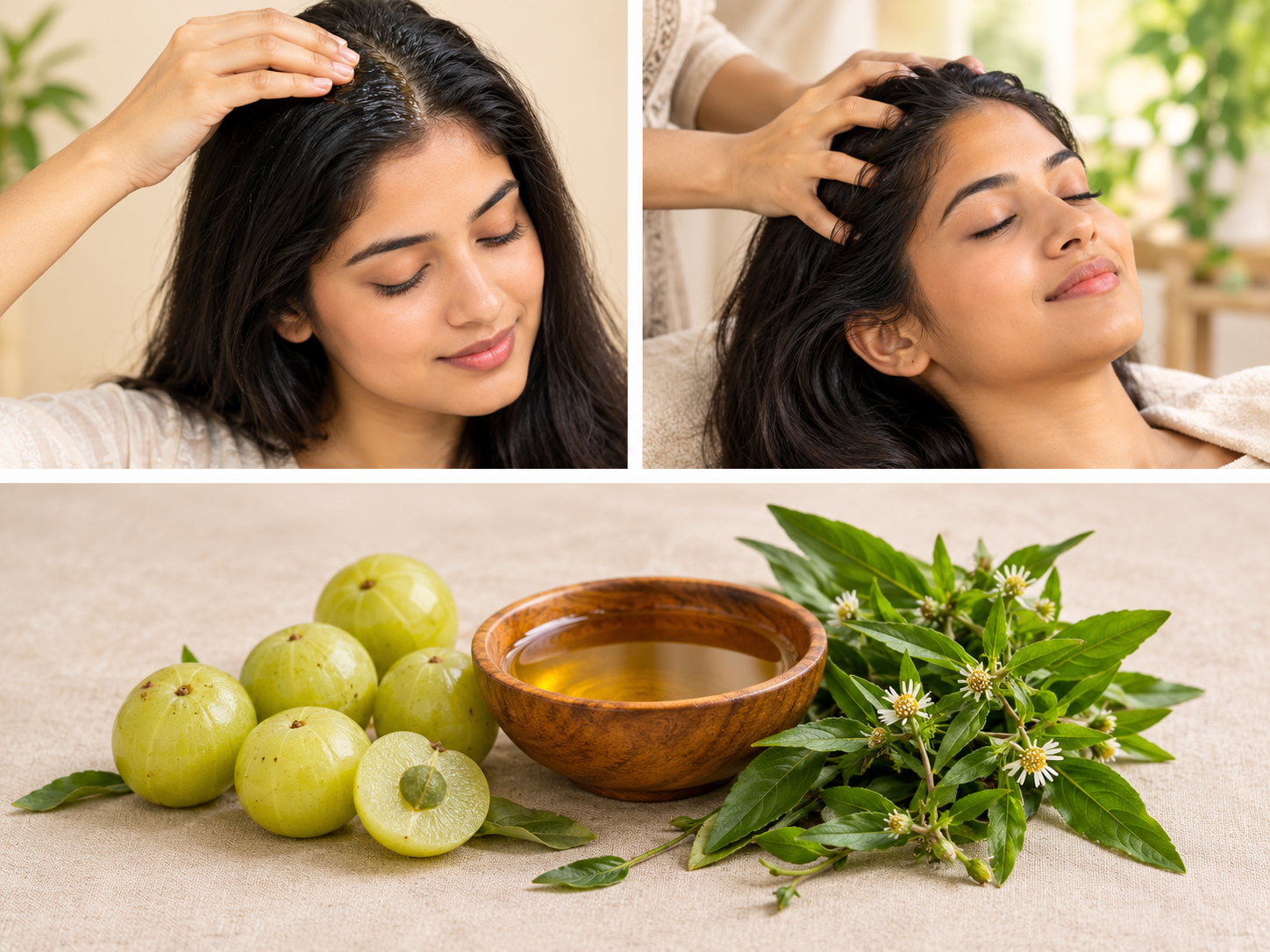
In Indian households, champi (head massage) is ritualistic for a reason. Proper oiling nourishes the follicles, boosts micro-circulation, and acts as a natural protective barrier.
Look for traditional herbal oils infused with Bhringraj (known in Ayurveda as Keshraj or the king of hair), Amla (rich in Vitamin C and antioxidants), and Brahmi. Gently warm 2 tablespoons of oil, massage it into your scalp using circular fingertip motions for 10 minutes, and leave it on for at least an hour before washing.
4. Combating Hard Water Damage Across Indian Cities
High mineral content (calcium and magnesium) in municipal water creates a crust on your scalp, blocking hair follicles and causing brittle snapping. If you live in an area with hard water:
• Install a Hard Water Filter: Attach an affordable shower filter to your tap to neutralize harsh salts.
• Apple Cider Vinegar (ACV) Rinses: Once a week, rinse your hair with a diluted ACV solution (1 tablespoon in 2 cups of water) after shampooing to dissolve mineral build-up and restore pH balance.
5. Indian Superfoods for Scalp Nutrition
External treatments only do half the job. Hair is made of a tough protein called keratin, and your follicles require robust internal nutrition:
1️⃣ Amla & Curry Leaves
Chew fresh curry leaves or drink raw amla juice daily to boost iron and biotin absorption.
2️⃣ Protein & Nuts
Incorporate paneer, dal, sprouted moong, almonds, and walnuts for amino acid building blocks.
3️⃣ Hydration & Electrolytes
Drink adequate water and coconut water to flush toxins and maintain cellular hydration.
6. Frequently Asked Questions
Can stress cause sudden hair fall?
Yes! Acute stress pushes hair follicles prematurely into a resting phase (Telogen Effluvium), causing hair to shed massively 2-3 months later.
How often should I oil my hair?
2 to 3 times a week is ideal for most Indian hair types. Do not leave heavy oil on for more than overnight to avoid attracting dust and clogged pores.