How to Know Your Skin Type at Home? (A Complete Indian Skincare Guide)
Have you ever bought a viral skincare product only to find it breaks you out or leaves your face feeling tight and dry? The secret to glowing, healthy skin isn't chasing trends—it’s understanding your unique skin type. Especially in India's diverse and demanding climate—ranging from humid coastal monsoons to dry northern winters—knowing your skin type is the bedrock of any effective routine.
Before investing in cleansers, serums, or Ayurvedic moisturizers, you need an accurate baseline. Here is how you can determine your exact skin type in the comfort of your home using three tried-and-tested dermatological methods.
Method 1
1. The Bare-Face Wash Test (The Gold Standard)
This is the most accurate way to understand how your skin behaves naturally without any product interference.
1. Cleanse: Wash your face gently with a mild, sulfate-free cleanser (like a gentle Neem or Aloe Vera face wash) and pat dry with a clean towel. Do not apply any toners, serums, or moisturizers.
2. Wait: Leave your skin completely bare for 30 to 45 minutes. Avoid touching your face or sitting directly in front of an AC or harsh sunlight.
3. Observe: Notice how your skin feels and looks.
Method 2
2. The Blotting Paper Method (Quick & Convenient)
If you are short on time, this method gives you immediate clarity on your facial oil distribution.
1. Wash your face and wait for 1 hour without applying any products.
2. Take clean blotting sheets or thin facial tissue papers and gently press them against different areas of your face—forehead, nose, cheeks, and chin.
3. Hold the sheets up against natural light to check how much oil was absorbed.
Method 3
3. T-Zone Analysis (Mapping Your Face)
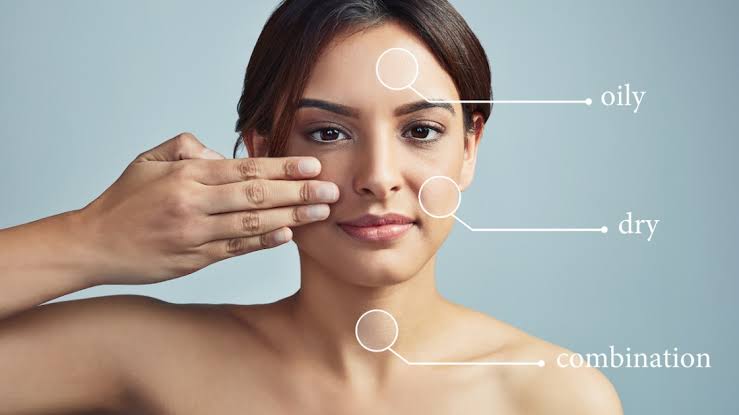
The "T-Zone" comprises your forehead, nose, and chin (forming the shape of a 'T'). In Indian skin types, combination skin is exceptionally common due to varying regional humidity and sweat gland distribution.
During your bare-face or blotting test, pay close attention to whether your T-zone is oily while your cheeks remain normal, dry, or flaky.
Decoding Your Results: What Is Your Skin Type?
💧Normal Skin
What it feels like: Balanced, comfortable, neither too oily nor too dry. Pores are small, and breakouts are rare.
Blotting test: Minimal or no oil picked up across all zones.
✨ Oily Skin
What it feels like: Greasy or shiny all over shortly after washing. Enlarged pores and prone to blackheads and acne.
Blotting test: Sheets from all areas (forehead, nose, cheeks, chin) show heavy oil absorption.
🌵 Dry Skin
What it feels like: Tight, rough, or flaky. May feel itchy or show fine lines easily. Pores are barely visible.
Blotting test: Sheets show zero oil residue; skin may feel tight when smiling or talking.
⚖️ Combination Skin
What it feels like: The most common type in India. Oily T-zone (forehead, nose, chin) combined with normal or dry cheeks.
Blotting test: Oily spots on the T-zone, clean or dry sheets from the cheeks.
🌿 Special Mention: Sensitive Skin
Sensitive skin can be oily, dry, or combination, but it reacts easily to weather changes, artificial fragrances, or harsh chemicals with redness, burning, or stinging. Opt for soothing Ayurvedic herbs like Manjistha, Turmeric, and Aloe Vera.
Why Knowing Your Skin Type Matters in India
India's tropical and subtropical climate brings high humidity, intense UV radiation, and seasonal pollution. An oily skin routine in Chennai's humid summers will look entirely different from a dry skin routine in Delhi's chilly winters. By mastering your skin type at home, you can curate a personalized regimen that protects your skin barrier, balances sebum production, and brings out your natural radiance.