
How Many Hours of Sleep Do I Need for Good Health?
Sleep is not simply “time spent in bed.” It is a daily biological need that supports the brain, mood, immunity, metabolism, learning and physical recovery. The right amount depends mainly on your age and individual circumstances.
Most healthy adults need 7–9 hours of sleep per night.
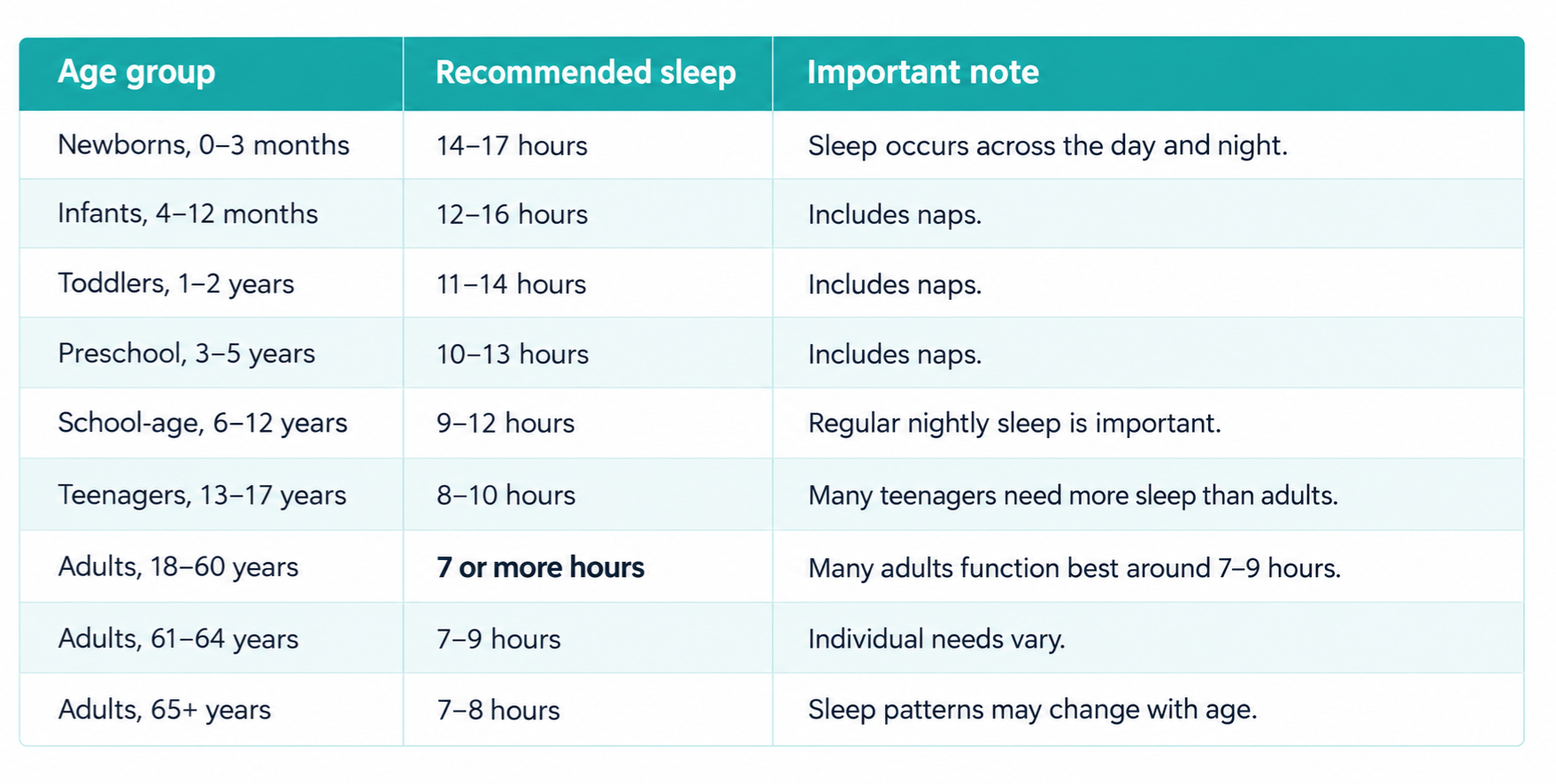
For adults aged 18–60, expert consensus recommends at least 7 hours regularly. Older adults generally need about 7–9 hours depending on age. Children and teenagers need considerably more.
Why sleep matters for good health
Good sleep supports both physical and emotional well-being. During sleep, the body and brain carry out processes involved in recovery, memory and regulation. Regularly getting too little sleep is associated with problems such as impaired attention and performance, mood changes, and higher risks of several chronic health conditions.
Sleep quality matters too. A person can spend enough time in bed but still wake repeatedly, snore heavily, or feel unrefreshed. Healthy sleep is therefore about duration, regularity, timing and quality—not only the number on the clock.
How many hours of sleep do you need by age?
Bear & Blend Tip: Instead of chasing an exact “perfect” number every night, create a consistent sleep window that gives you enough opportunity for your age group and leaves you feeling rested during the day.
What is the right amount of sleep for an Indian adult?
For most healthy adults in India, the same evidence-based adult sleep benchmark applies: aim for at least 7 hours regularly, with around 7–9 hours being a practical target for many adults. Your work schedule, health, age, family responsibilities and lifestyle can change what works for you.
India-specific factors can also make sleep harder to obtain or maintain. Heat and humidity during summer, urban noise, long commutes, irregular work schedules, late-night screen use and shift work can all interfere with a consistent sleep routine. The goal is not to follow a rigid clock time—it is to protect sufficient, regular and restorative sleep.

Is 6 hours of sleep enough?
For most adults, 6 hours on a regular basis is less than recommended. Some people may feel that they can manage on less, but consistently sleeping below the recommended amount is associated with adverse health and safety outcomes.
If you occasionally sleep 6 hours because of travel, work or family commitments, that does not mean something is immediately wrong. The concern is a repeated pattern of insufficient sleep, especially when it causes daytime sleepiness, poor concentration, irritability or reduced performance.
Is 8 hours of sleep the ideal amount?
Eight hours is a useful target for many adults, but it is not a universal rule. Sleep need varies between individuals. The strongest adult recommendation is to get 7 or more hours regularly, while many adults naturally fall in the 7–9 hour range.
How do you know if you are getting enough sleep?
🌅
You wake reasonably refreshed
You do not routinely feel as though you could immediately go back to sleep.
🧠
You can focus during the day
Attention, learning and everyday performance are not consistently impaired by sleepiness.
☀️
You stay alert
You are not regularly fighting strong sleepiness during normal daytime activities.
Sleep duration vs. sleep quality
Hours are important, but they are only one part of healthy sleep. You may need medical evaluation if you regularly spend enough time in bed but still have loud snoring, gasping or pauses in breathing, repeated awakenings, persistent insomnia, or severe daytime sleepiness.
A consistent sleep schedule also matters. Going to bed and waking up at very different times every day can make it harder for your body clock to stay aligned.
How to improve sleep naturally: practical tips for India
Keep a consistent wake time: Try to wake at roughly the same time each day, including weekends.
Protect your sleep window: Work backwards from your wake-up time and allow enough time for sleep rather than relying on catch-up sleep.
Get daytime light: Regular exposure to natural light, especially earlier in the day, helps support the body clock.
Move regularly: Physical activity during the day can support sleep quality.
Be thoughtful with caffeine: Coffee, tea, energy drinks and some other beverages contain caffeine. If caffeine interferes with your sleep, avoid it later in the day.
Reduce late-night stimulation: Keep phones, social media, work and emotionally stimulating content away from your final wind-down period when possible.
Make the bedroom comfortable: A dark, quiet and comfortably cool room can support better sleep. In hot Indian weather, ventilation or cooling may be especially important.
Keep naps sensible: If naps make it harder to sleep at night, shorten them or move them earlier.

What about sleep after a late night?
One short night does not automatically mean poor health. The bigger issue is a repeated pattern of insufficient sleep. If you have accumulated sleep debt, extra sleep may help you recover, but it is better not to rely on regular weekend “catch-up” sleep as a replacement for a consistent schedule.
Can sleeping too much be a problem?
More sleep is not automatically better. Regularly sleeping much longer than your usual requirement can have many possible explanations, including illness, medication effects, sleep disorders or accumulated sleep debt. If you consistently need unusually long sleep and still feel tired, discuss it with a healthcare professional rather than simply trying to sleep even longer.
Sleep and common health goals
Sleep is closely connected with everyday health. Insufficient sleep is associated with increased risk of several conditions, including obesity, diabetes, high blood pressure and cardiovascular disease. Sleep also affects attention, mood, reaction time and safety.
This does not mean that one night of poor sleep causes disease. Health outcomes are influenced by many factors, and sleep is one important part of the overall picture.
When should you talk to a doctor?
Consider professional advice if you regularly:
Have difficulty falling asleep or staying asleep.
Wake up repeatedly despite having enough time for sleep.
Snore loudly or have witnessed pauses/gasping during sleep.
Feel excessively sleepy during the daytime.
Need unusually long sleep but remain tired.
Have persistent sleep problems that affect work, study, mood or safety.
Do not drive or operate machinery if you are dangerously sleepy. Persistent sleep problems can sometimes be a sign of an underlying sleep or medical disorder.
How much sleep do children need?
Sleep needs vary by age: 9–12 hours for ages 6–12, 10–13 hours for ages 3–5, 11–14 hours for ages 1–2, and 12–16 hours for infants 4–12 months, including naps.
Does sleeping late affect health?
The clock time itself is not the only issue. Irregular schedules, insufficient sleep and misalignment with your body clock can affect sleep quality and daytime functioning. A consistent schedule is generally helpful.