
How Can I Maintain My Weight After Losing It Without Following a Strict Diet?
Weight maintenance does not have to mean staying on a restrictive diet forever. The goal is to build a flexible routine around everyday Indian meals, regular movement, sleep and simple habits you can actually continue.
Losing weight can feel like the hard part, but maintaining that loss is where many people struggle. The good news is that weight maintenance is not about eating perfectly or following a strict diet indefinitely. It is about finding a sustainable balance that fits your food preferences, family life, work schedule and activity level.
Core answer: You can maintain your weight without a strict diet by keeping a consistent eating pattern, building most meals around minimally processed foods, staying physically active, getting enough sleep, monitoring your weight or waist trend periodically, and responding early to small changes instead of waiting for a large regain.
1. First, change the goal: from “dieting” to “maintaining”
During weight loss, you usually create an energy deficit. After reaching your desired or medically appropriate weight, the goal changes: you now need enough food to support your body while avoiding a sustained surplus.
That does not mean you have to count every calorie. In fact, a practical maintenance routine can be based on portions, hunger and fullness cues, food quality, activity and regular monitoring. Your maintenance needs are individual and can change with age, activity, medications, sleep, health conditions and changes in routine.
Bear & Blend Tip: Think of weight maintenance as a “normal lifestyle with guardrails,” not a permanent weight-loss diet.
2. Use the 80–20 approach to eating—without turning it into a rule
You do not need to label foods as completely “good” or “bad.” A flexible pattern is easier to sustain than severe restriction. Most of your meals can be built from nutritious everyday foods, while occasional sweets, restaurant meals or festive foods can still fit.
🥗
Make vegetables routine
Add sabzi, salad or other vegetables to lunch and dinner. Variety improves the nutritional quality of your meals without requiring complicated recipes.
🌾
Keep familiar staples
Rice, roti, dal and other Indian staples do not automatically prevent weight maintenance. Portion size and the overall meal pattern matter.
🥛
Include protein foods
Dal, beans, chickpeas, curd, eggs, fish, chicken, paneer or tofu can help make meals more filling. Choose options that suit your dietary pattern.
🍊
Choose whole fruit more often
Whole fruits provide fibre and are generally more filling than fruit juice. Keep a variety of seasonal fruits available for convenient snacks.
3. Build an Indian “maintenance plate”
Instead of following a rigid menu, use a simple plate framework. It gives you structure while allowing your meals to change from day to day.
Make more room for
Vegetables and salads
Dal, beans and other pulses
Appropriate portions of protein-rich foods
Whole grains and traditional staples in sensible portions
Whole fruit
Unsweetened or minimally sweetened beverages
Keep an eye on
Sugary drinks and frequent liquid calories
Deep-fried snacks eaten frequently
Large portions of calorie-dense foods
Frequent highly processed packaged foods
Mindless eating while watching screens
“Weekend overeating” after restrictive weekdays
For Indian households, the easiest plan is often the one that uses the food already cooked at home. You can adjust the quantity and balance of the meal rather than preparing a separate “diet meal.”
4. Keep protein and fibre in your meals
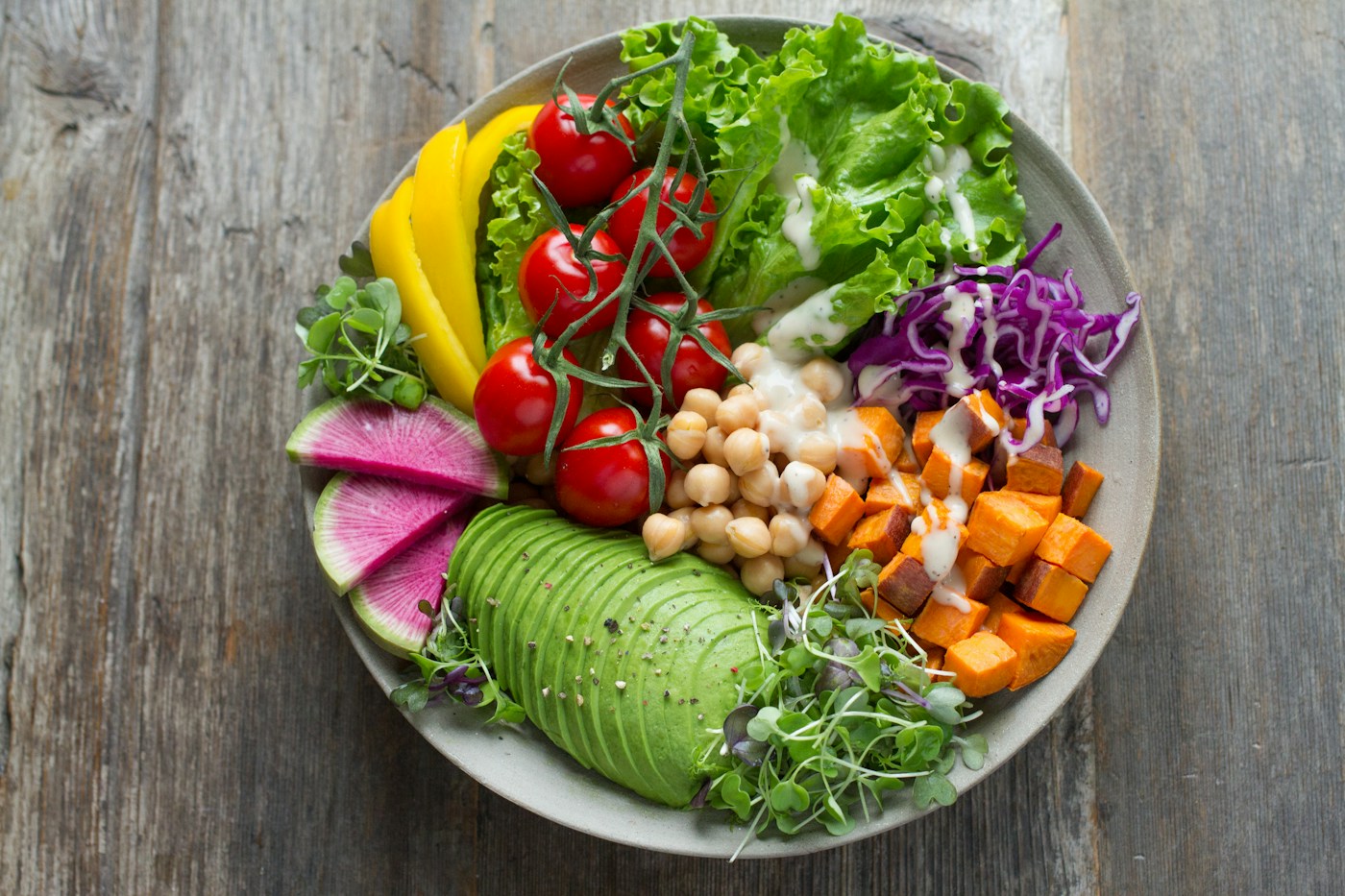
After weight loss, hunger can become a challenge for some people. Meals that contain protein and fibre can help improve fullness and make a balanced eating pattern easier to follow.
Useful Indian options include dal, rajma, chana, sprouts, curd, eggs, fish, chicken, paneer, tofu, vegetables, fruits, oats and whole grains. You do not need a protein supplement to create a balanced meal.
5. Do not give up rice or roti just because you lost weight
A common fear is that eating rice or roti again will automatically bring the weight back. It is more useful to consider the complete meal and portion rather than blaming one carbohydrate food.
If rice is part of your normal household diet, you can continue eating it while pairing it with dal or another protein source and plenty of vegetables. The same principle can apply to roti. Your overall intake, food quality and activity pattern matter more than declaring a single staple “off limits.”
Practical rule: If removing a food makes your routine difficult to maintain, look for a sustainable portion and meal combination instead of permanent restriction.
6. Keep moving—even when you are no longer trying to lose weight
Regular physical activity is one of the most useful habits for weight maintenance. For general health, adults should aim for at least 150 minutes of moderate-intensity aerobic activity per week, or an equivalent amount of vigorous activity, plus muscle-strengthening activity on at least 2 days per week. Individual needs for maintaining weight can be higher or lower.
Walking
Brisk walking is accessible and can be divided into shorter sessions. Walk after meals, during work breaks or as part of your commute when practical.
Strength training
Include resistance exercises at least twice a week. Bodyweight exercises, resistance bands or weights can all be used depending on ability and experience.
You do not need to exercise only in a gym. Household work, active commuting, dancing, cycling, sports and regular walking all contribute to your overall movement.
7. Protect your daily routine from “weekend drift”
Many people eat reasonably consistently during the week and then have a very different pattern on weekends, holidays or social occasions. A few flexible meals are not the problem; the issue is when high-calorie eating becomes the default for several days at a time.
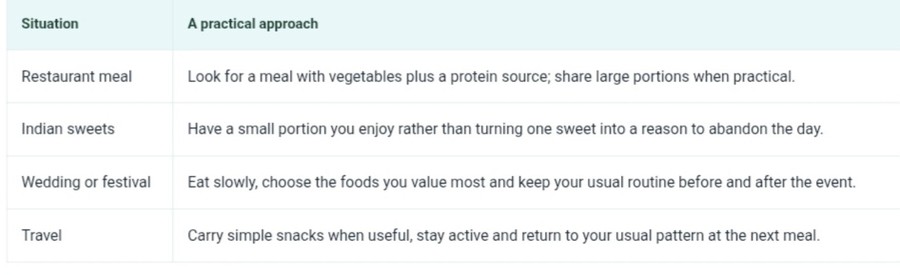
Do not arrive at a celebration extremely hungry.
Choose the foods you genuinely enjoy rather than eating everything available.
Eat slowly and pause before taking another serving.
Keep your normal activity routine as much as possible.
Return to your usual pattern at the next meal instead of trying to “compensate” with extreme restriction.
8. Use the weighing scale as a feedback tool—not a punishment
Body weight naturally moves up and down because of water, food in the digestive system, sodium intake, menstrual-cycle changes and other factors. A single reading does not tell you whether you have regained body fat.
Periodic monitoring can help you notice a trend. Some people prefer a weekly weigh-in; others may use waist measurements or how their clothes fit. Choose a method that does not increase anxiety and use it to guide small adjustments.
If your weight starts trending upward: do not wait until a large amount has returned. Review portions, snacks, sugary drinks, eating out, activity, sleep and routine changes. Then make one or two realistic adjustments.
9. Sleep matters more than most “weight-loss hacks”
Sleep and stress can influence appetite, food choices, energy and daily activity. A sustainable maintenance plan therefore needs to include sleep rather than treating it as an optional extra.
Keep a reasonably consistent sleep and wake schedule.
Create a relaxing wind-down routine before bed.
Avoid using food as the default response to stress or boredom.
Build short breaks, walking or other stress-management habits into busy days.
10. You can eat out and still maintain your weight
Weight maintenance should work in real life—including weddings, festivals, office lunches and restaurant meals. You do not have to refuse every social meal.
11. What if you regain a little weight?
Small changes are common and do not mean you have failed. Weight maintenance is a long-term process, not a pass/fail test.
Instead of starting another crash diet, ask:
Have my portion sizes gradually increased?
Am I drinking more sugary beverages or eating more calorie-dense snacks?
Has my daily movement decreased?
Has work, travel, stress or sleep changed?
Am I eating very little during the day and overeating at night?
Have any medicines or health conditions changed?
Then make a small correction you can keep doing. If weight continues to rise despite consistent efforts, speak with a qualified healthcare professional or registered dietitian. Medicines, medical conditions, hormonal factors, sleep problems and other factors can affect weight management.
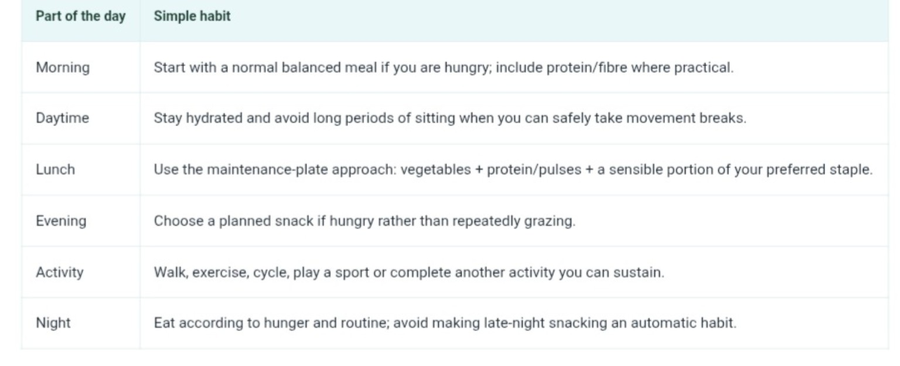
12. A simple daily maintenance routine
13. What you do NOT need to do
❌ You do not need a crash diet
Very restrictive approaches can be difficult to sustain and may make normal eating feel like failure.
❌ You do not need to ban carbohydrates
Balanced eating can include rice, roti, oats and other carbohydrate foods in appropriate portions.
❌ You do not need “detox” drinks
No special drink is required to maintain weight. Water is a simple choice for hydration.
❌ You do not need perfect days
A sustainable pattern allows occasional celebrations and then returns to normal without guilt.
15. The bottom line
Maintaining weight after losing it does not require living on a strict diet forever. The most useful approach is to turn the habits that helped you lose weight into a realistic long-term lifestyle.
For an Indian routine, that can mean continuing to enjoy familiar foods such as dal, vegetables, roti, rice, curd, fruits and other household meals while paying attention to portions and overall balance. Add regular movement, strength training, adequate sleep and occasional monitoring. When your routine changes, adjust early rather than waiting for a major regain.
Remember: The best weight-maintenance plan is not the strictest one. It is the one that you can realistically follow through ordinary weekdays, busy workdays, family meals, travel, festivals and celebrations.
Can I eat rice after losing weight?
Yes. Rice can be part of a balanced Indian eating pattern. Pay attention to portion size and pair it with vegetables and protein-rich foods such as dal, beans, curd, eggs, fish, chicken, paneer or tofu.
What is the best way to maintain weight during festivals in India?
Keep your normal meals and activity as consistent as possible, choose portions of festive foods you genuinely enjoy, eat slowly and return to your normal routine after the celebration rather than compensating with extreme restriction.
Can I eat sweets occasionally and still maintain my weight?
For many people, occasional sweets can fit into an overall balanced eating pattern. The key is frequency, portion size and the overall pattern of food intake rather than treating one food as permanently forbidden.