Which Vitamin Deficiency Causes Hair Fall? A Deep Dive into India’s Silent Nutritional Crisis
Unraveling the science behind hair thinning in modern urban India, exploring key lifestyle drivers, and understanding why standard diets fall short.

If you find clumps of hair on your pillow, in the shower drain, or tangled in your comb every morning, you are far from alone. Across India's bustling metropolitan hubs—from Mumbai and Bengaluru to Delhi NCR—hair fall has transitioned from an occasional seasonal nuisance to a chronic wellness concern affecting both men and women in their 20s and 30s.
While external factors like hard water, high pollution levels, and stress play undeniable roles, dermatologists and nutritionists agree that the root cause often lies much deeper: nutritional deficiencies. Specifically, certain vitamins and micronutrients are vital for cellular turnover in hair follicles. When these reserves deplete, hair production stalls, entering a premature resting phase known as telogen effluvium.
The Core Culprits: Which Deficiencies Trigger Hair Fall?
Hair follicles are among the fastest-dividing cells in the human body, which means they have high energy and nutritional demands. When your diet lacks key micronutrients, the body prioritizes vital internal organs over hair growth, leading to thinning strands.
🌟1. Vitamin D (The Sunshine Hormone)
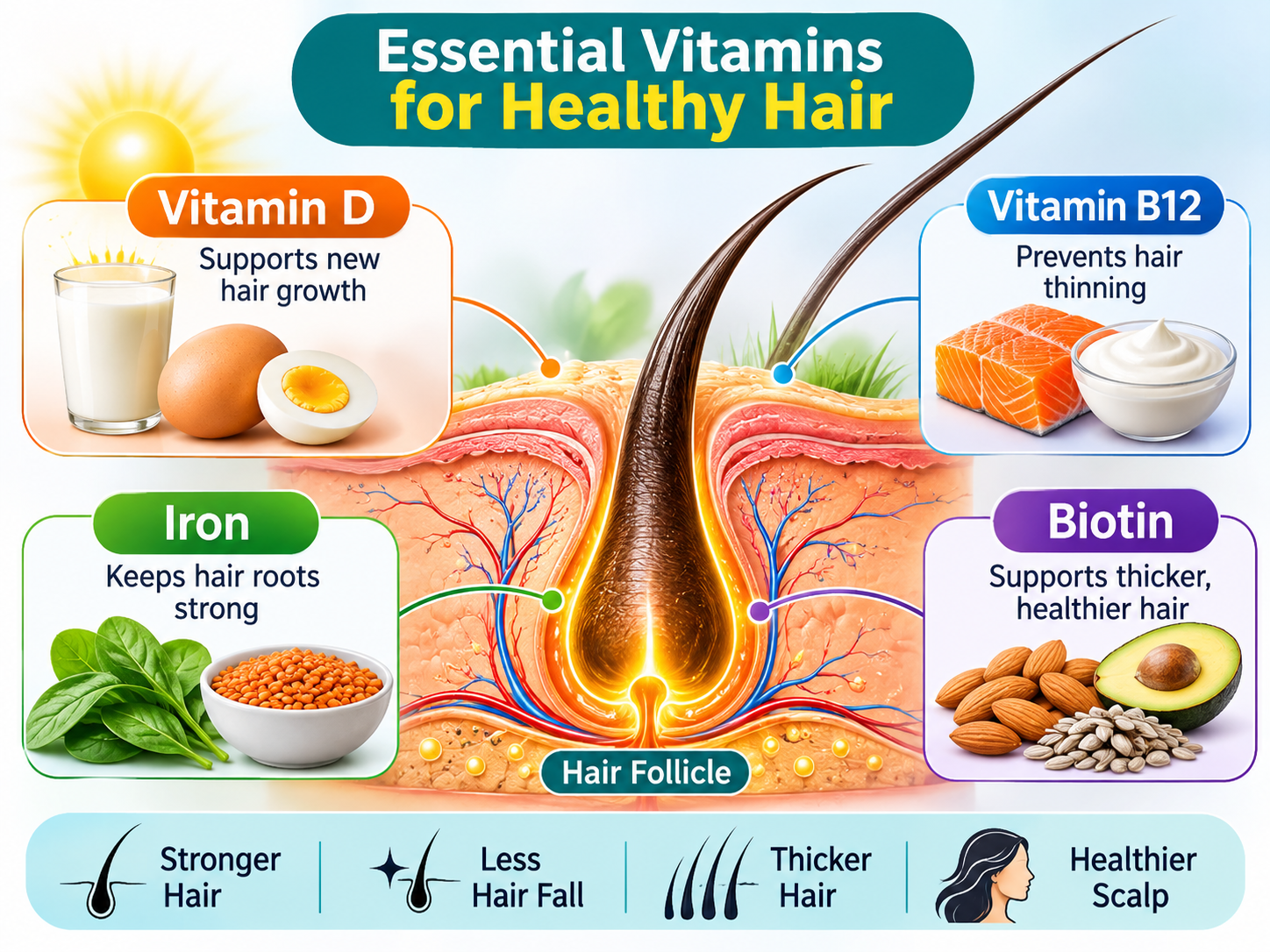
Vitamin D receptors help stimulate new hair follicles. Paradoxically, despite India’s abundant sunlight, over 70% to 80% of urban Indians suffer from Vitamin D deficiency due to indoor desk jobs, heavy sunscreen use, and urban architecture.
💧2. Vitamin B12 & Iron (Ferritin)
B12 is essential for red blood cell formation, which carries oxygen to your scalp. Iron deficiency (very prevalent in Indian vegetarian demographics) lowers ferritin levels, directly starving hair roots of necessary oxygen.
🛡️3. Biotin (Vitamin B7) & Antioxidant Vitamins (C & E)
Biotin helps produce keratin, the fundamental protein structure of hair. Meanwhile, Vitamins C and E act as powerful antioxidants, protecting hair follicles from oxidative stress caused by high city pollution and fast-paced urban lifestyles.
Key Drivers: Rising Awareness of Nutritional Deficiencies Among Urban Demographics
Understanding why these deficiencies are spiking across India requires looking closely at modern socioeconomic shifts. The rapid urbanization of Indian society has transformed dietary patterns, work culture, and daily habits in ways that directly impact nutritional status.
Several structural and behavioral shifts explain this growing phenomenon:
• The Rise of Preventive Health Consciousness: Urban millennials and Gen Z professionals in Tier-1 and Tier-2 cities are moving away from reactive healthcare ("treating illness") toward proactive wellness ("optimizing health"). Routine full-body blood check-ups have exposed widespread, subclinical deficiencies that previous generations ignored.
• Dietary Gaps and Ultra-Processed Foods: Hectic corporate schedules, long commutes, and reliance on quick-service food delivery apps have led to diets rich in empty calories but sparse in micronutrient-dense whole grains, lentils, fresh vegetables, and traditional superfoods.
• High Prevalence of Plant-Based Diets Without Adequate Planning: While traditional Indian diets are rich in heritage grains, modern adaptations often lack sufficient protein bioavailability and specific vitamins like B12, which is primarily found in animal sources or fortified foods.
• Chronic Stress and Cortisol Overload: Urban corporate lifestyles introduce relentless psychological stress. Elevated cortisol levels deplete the body's B-vitamin reserves at an accelerated rate, directly compromising hair growth cycles.
How to Bridge the Gap: Sustainable Steps Forward
Tackling hair fall requires a comprehensive, sustainable approach rather than quick-fix shampoos or topical oils alone. True hair vitality is built from the inside out:

1. Get Tested: Consult a healthcare professional and get your Vitamin D, B12, and Serum Ferritin levels checked before starting any supplement regime.
2. Audit Your Daily Plate: Incorporate colorful seasonal fruits, millets, leafy greens, sprouts, and nuts into your daily meals to secure a broad spectrum of natural micronutrients.
3. Choose Clean, Transparent Wellness Supplements: When dietary intake falls short due to demanding lifestyles, incorporate certified, high-quality supplements backed by clean-label transparency to safely bridge nutritional gaps.
ℹ️ A Note from Bear & Blend
Wellness is a journey, not a destination. By understanding your body’s unique nutritional requirements and cultivating mindful daily habits, you can restore both your inner vitality and your hair's natural strength. Explore our curated wellness ecosystem designed specifically for the modern Indian household.