
Damaged Skin Barrier: Symptoms, Indian Weather Triggers & Step-by-Step Repair Guide
Is your skin stinging every time you apply a moisturizer? Discover why India’s hard water, intense pollution, and over-exfoliation ruin your skin barrier—and how to heal it.
1. What is the Skin Barrier & Why Does It Matter
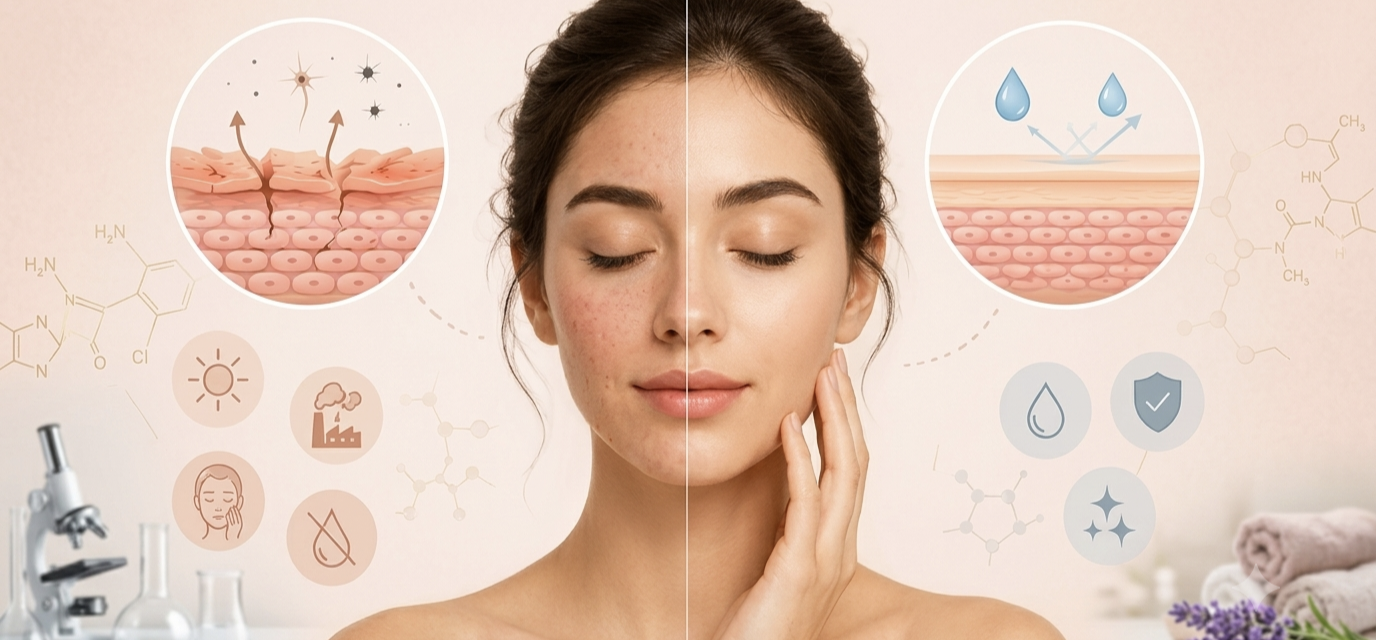
The outermost layer of your epidermis is known as the stratum corneum. Often visualized as a "brick and mortar" wall, your skin cells are the bricks, while lipids (ceramides, cholesterol, and fatty acids) act as the mortar holding them together.
When this barrier is intact, it locks in vital moisture and shields your living tissue from environmental pollutants, UV rays, and harmful microbes. However, when compromised, moisture escapes rapidly (causing transepidermal water loss or TEWL), and irritants penetrate deeply. In India's diverse and often harsh climates, keeping this protective wall robust is paramount.
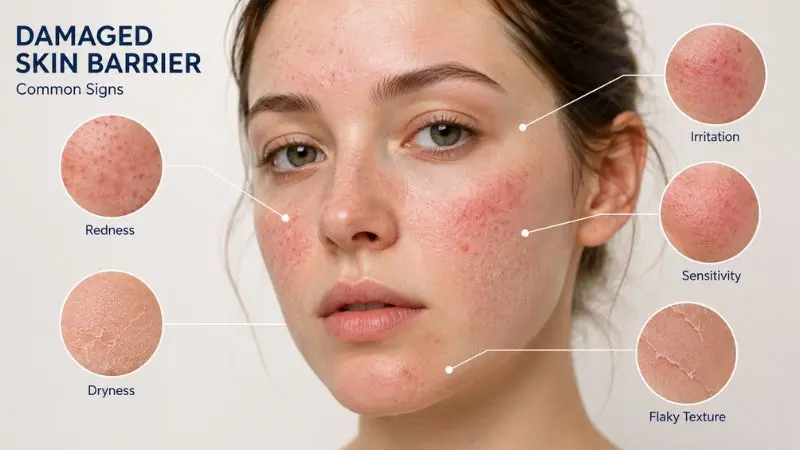
2. Signs & Symptoms of a Damaged Skin Barrier
How do you know your skin barrier is crying for help? Unlike typical acne breakouts, a damaged barrier presents with distinct discomfort. Look out for these telltale signs:
⚠️ Stinging & Burning
Even gentle, alcohol-free products like plain aloe gel or basic moisturizers cause a sharp stinging sensation upon application
🔴 Persistent Redness
Patchy redness across cheeks, chin, or nose that lingers long after washing your face.
💧Chronic Flakiness & Tightness
Skin feels tight and rigid after washing, accompanied by dry patches or rough texture despite heavy moisturizing.
✨ Sudden Breakouts & Sensitivity
Unexplained micro-bumps, sudden acne flare-ups, and heightened sensitivity to sun or dust.
3. Common Triggers in the Indian Context
Skincare trends from Western climates do not always align with Indian environmental realities. Key culprits in India include:
• Hard Water in Metros: High mineral content (calcium and magnesium) in cities like Bangalore, Delhi, and Chennai leaves mineral deposits on skin, stripping natural oils.
• Extreme Climate Swings: Scorching dry summers, intense humidity during monsoons, and bitter dry winters in North India stress skin adaptability.
• Aggressive Over-Exfoliation: The obsession with glass skin leads many to layer strong AHAs (Glycolic Acid), BHAs (Salicylic Acid), and Retinoids simultaneously with physical walnut scrubs.
• Urban Air Pollution: High particulate matter (PM2.5) generates oxidative stress, breaking down lipids in the stratum corneum.
4. Step-by-Step Skin Barrier Repair Protocol
Healing a damaged barrier requires a philosophy of "skin minimalism." Follow these 4 essential steps for 3 to 4 weeks:
1. Strip Down Your Routine (Skin Fasting)
Temporarily stop all active ingredients—retinols, Vitamin C serums, chemical peels, and physical scrubs. Stick to only a gentle cleanser, moisturizer, and sunscreen.
2. Switch to pH-Balanced Cleansing
Use non-foaming, sulfate-free cleansers with a pH close to natural skin (around 5.5). Avoid washing with hot water; use lukewarm or cool water instead.
3. Rebuild with Ceramides & Niacinamide
Look for moisturizers rich in ceramides, fatty acids, squalane, and panthenol. These replenish the missing mortar between skin cells.
4. Never Skip Broad-Spectrum Sunscreen
UV rays delay barrier recovery. Opt for soothing, mineral-based sunscreens with SPF 50 PA++++ that don't cause stinging.
5. Ayurvedic & Natural Wisdom for Calm Skin
Traditional Indian wellness also offers incredible botanical treasures known for their anti-inflammatory and cooling properties (pacifying Pitta dosha):
🌱 Pure Aloe Vera Gel
Fresh or organic aloe provides immediate hydration and cools skin inflammation caused by heat and pollution.
☘️ Manjistha & Turmeric
Renowned blood purifiers and anti-inflammatory agents that help calm chronic redness and heal micro-tears.
6. Frequently Asked Questions
How long does it take to repair a damaged skin barrier?
For most people, a compromised skin barrier takes anywhere between 2 to 4 weeks of consistent gentle care. However, if severe damage or contact dermatitis is present, it may take up to 6 weeks.
Can I use Vitamin C or Niacinamide while repairing my barrier?
Low-percentage Niacinamide (2-5%) is generally well-tolerated and helps with barrier repair. However, pure L-Ascorbic Acid (Vitamin C), AHAs, and Retinoids should be strictly avoided until your skin no longer stings with plain moisturizer.
Does hard water in Indian cities really damage skin?
Yes! Hard water leaves a soap scum residue and mineral scale on the skin, disrupting the acid mantle and causing dryness. Installing a shower filter or final-rinsing your face with filtered/mineral water can make a massive difference.